

In today’s fast-paced construction and design industry, precision, efficiency, and innovation have become essential to success. Gone are the days when architects and engineers relied solely on hand-drawn sketches and blueprints. The emergence of CAD Drafting Services has transformed how professionals visualize, plan, and execute projects. From concept design to final construction, CAD software plays a vital role in enhancing accuracy, collaboration, and overall project quality.
What is CAD Drafting?
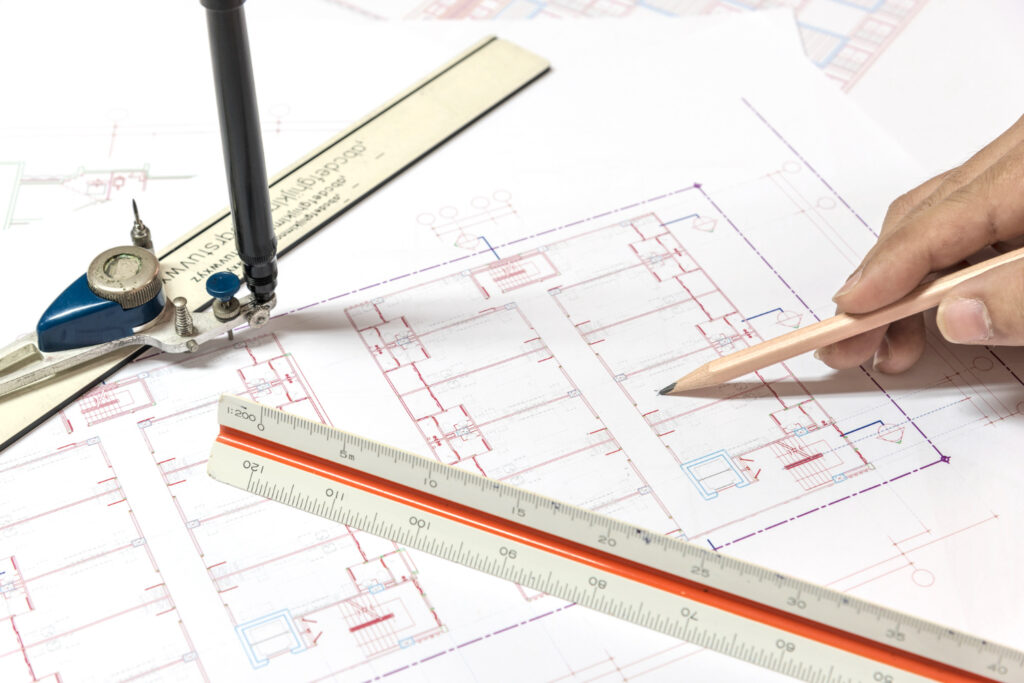
CAD stands for Computer-Aided Design, a technology that allows designers and engineers to create 2D drawings and 3D models digitally. CAD drafting refers to the process of using specialized CAD software to produce precise technical drawings and plans. These digital drafts serve as blueprints for buildings, mechanical components, electrical layouts, and infrastructure designs.
With tools like AutoCAD, SolidWorks, Revit, and SketchUp, professionals can visualize every detail before a single brick is laid or a machine is manufactured. This digital approach not only saves time but also ensures higher accuracy and better design outcomes.
Why CAD Drafting Has Become Essential in Modern Construction
The construction industry has always relied heavily on design documentation. However, the traditional drafting process often involved manual drawings that were prone to human error, time delays, and miscommunication. CAD Drafting Services have addressed all these challenges by offering a streamlined, efficient, and cost-effective solution.
Here are some of the key reasons why CAD drafting is indispensable in modern construction and design:
1. Enhanced Accuracy and Precision
One of the most significant advantages of CAD drafting is its unparalleled accuracy. Even the smallest measurement error in manual drafting can lead to costly mistakes during construction. CAD software eliminates such issues through automated dimensioning, scaling, and error-checking tools. This ensures that every element — from floor plans to structural details — is perfectly aligned and to scale.
2. Improved Visualization and 3D Modeling
Before CAD, architects had to rely on flat 2D drawings to represent complex structures. Today, with 3D modeling and CAD visualization tools, designers can create realistic renderings of projects long before construction begins. These models allow stakeholders to explore the design from every angle, understand spatial relationships, and even simulate lighting, textures, and materials. This improves decision-making and helps clients visualize the final outcome more effectively.
3. Streamlined Collaboration and Revisions
Construction projects involve multiple stakeholders — architects, engineers, contractors, and clients. Communication gaps can easily lead to design errors and rework. With CAD Drafting Services, teams can collaborate seamlessly in real time. Cloud-based CAD platforms allow instant sharing of design files, annotations, and revisions, ensuring everyone stays on the same page. Revisions that once took days can now be completed within hours, saving time and improving project coordination.
4. Time and Cost Efficiency
Manual drafting is time-consuming and often leads to delays. In contrast, CAD drafting speeds up the entire design process. Designers can quickly modify elements, duplicate components, and generate detailed drawings without starting from scratch. Moreover, digital storage and sharing eliminate the need for physical documentation. These efficiencies reduce labor costs and accelerate project timelines — making CAD Drafting Services an economically smart choice for businesses.
5. Compliance with Industry Standards
In modern construction, adherence to building codes and safety standards is non-negotiable. CAD software allows designers to integrate these standards directly into their drawings, ensuring regulatory compliance from the very beginning. Layer management and templates make it easy to follow standardized drafting conventions, reducing the risk of approval delays or design conflicts.
6. Integration with Other Technologies
The power of CAD drafting extends beyond design. Modern CAD systems easily integrate with Building Information Modeling (BIM), CAM (Computer-Aided Manufacturing), and even Virtual Reality (VR) platforms. This interconnected workflow enables a more holistic approach to construction planning, fabrication, and visualization. For example, integrating BIM with CAD allows teams to manage not just geometry but also building performance data — ensuring sustainability and long-term maintenance efficiency.
Applications of CAD Drafting Across Industries
While CAD drafting is most commonly associated with architecture and construction, its applications span across multiple industries:
- Architectural Drafting: For designing residential, commercial, and industrial buildings with detailed plans, elevations, and sections.
- Civil Engineering: For creating layouts of roads, bridges, drainage systems, and infrastructure projects.
- Mechanical Design: For modeling components, assemblies, and manufacturing parts.
- Electrical Drafting: For wiring diagrams, circuit layouts, and control systems.
- Interior Design: For space planning, furniture layouts, and 3D renderings.
Each of these fields benefits from the adaptability and accuracy that modern CAD Drafting Services offer.
The Evolution of CAD Software in Design Projects
From its introduction in the 1960s to the present day, CAD technology has evolved drastically. Early CAD systems were limited to simple 2D drafting, but today’s CAD software supports complex 3D modeling, rendering, and simulation capabilities. Tools like AutoCAD, Revit, SolidWorks, and MicroStation have become industry standards, offering specialized features for architecture, engineering, and manufacturing.
Moreover, cloud-based platforms and AI-driven design tools are revolutionizing how professionals work. Features like parametric modeling, automated drafting, and real-time rendering are now common, enabling smarter and faster workflows. As technology continues to advance, the future of CAD drafting will likely include even greater automation, integration with digital twins, and the use of AI for generative design.
Benefits of Outsourcing CAD Drafting Services
Many construction and design firms now prefer outsourcing their drafting tasks to specialized CAD Drafting Services providers. This approach offers several advantages:
- Cost Reduction: Outsourcing eliminates the need for expensive software licenses and in-house drafting teams.
- Access to Expertise: Dedicated CAD professionals bring years of experience and technical proficiency.
- Scalability: Firms can easily scale their drafting needs based on project size and deadlines.
- Focus on Core Activities: Architects and engineers can focus on design innovation while drafting experts handle documentation.
This model ensures high-quality deliverables while maintaining flexibility and efficiency in project execution.
The Future of CAD Drafting in Construction
As sustainability, smart infrastructure, and digital transformation reshape the construction industry, CAD drafting will continue to play a central role. The integration of AI, VR, AR, and BIM will further enhance design visualization, predictive analysis, and project coordination. Green building design and energy-efficient modeling will rely heavily on CAD tools to optimize resource use and minimize waste.
In the coming years, we can expect CAD Drafting Services to become even more automated, intelligent, and collaborative — transforming how we conceptualize and construct the spaces of tomorrow.
Conclusion
The role of CAD Drafting in modern construction and design projects cannot be overstated. It has revolutionized every stage of the design-to-build process — enhancing accuracy, reducing costs, and improving collaboration across disciplines. Whether it’s a skyscraper, a residential complex, or a mechanical component, CAD software empowers designers to bring their visions to life with unmatched precision and efficiency. As technology continues to evolve, embracing professional CAD Drafting Services is not just a competitive advantage — it’s a necessity for success in the ever-changing world of modern construction and design.