
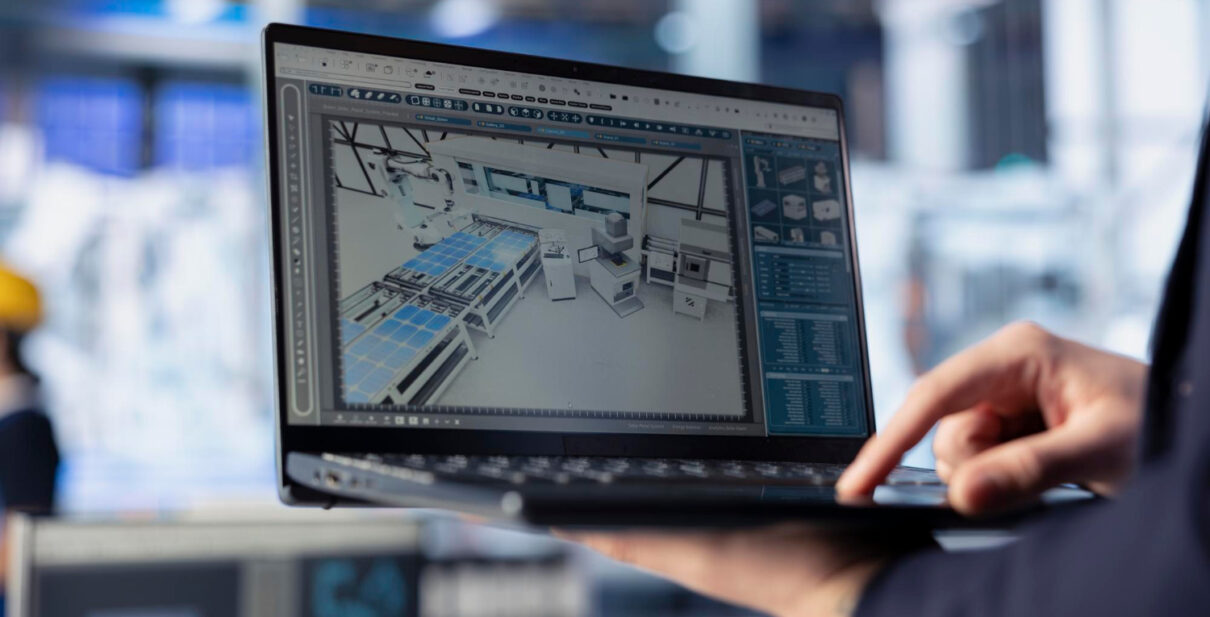
In today’s fast-paced construction landscape, ensuring accuracy in every stage of development is vital. This is especially true for MEP (Mechanical, Electrical, and Plumbing) systems, which form the backbone of any modern structure. A single misstep in the design or execution phase can lead to costly reworks and delays. That’s where Building Information Modeling (BIM) plays a game-changing role.
One of the standout applications of BIM solutions is Fabrication Drawing Creation—a process that benefits immensely from the precision, coordination, and efficiency that BIM provides. This blog explores how BIM ensures unparalleled accuracy and control in creating fabrication drawings for MEP systems.
Understanding Fabrication Drawings in MEP
Fabrication drawings are detailed technical documents used to manufacture and install MEP components. These include ductwork, piping, cable trays, conduits, and other crucial systems.
Unlike schematic diagrams or general layouts, fabrication drawings specify dimensions, materials, joint types, and exact installation instructions. These are the blueprints used by fabricators and site engineers to build and assemble parts precisely.
Creating these drawings manually or using traditional CAD tools often results in clashes, inconsistencies, and on-site surprises. BIM eliminates these inefficiencies by automating and integrating the entire process.
Why Accuracy Matters in MEP Fabrication
Accuracy in MEP fabrication is not optional—it’s essential.
- Reduced Rework: Incorrect dimensions or layout misalignments lead to time-consuming rework.
- Cost Efficiency: Fabrication errors increase material wastage and labor costs.
- Site Safety: Faulty installations can create safety hazards.
- System Performance: Inaccurate designs may compromise ventilation, power flow, or water distribution.
By using BIM solutions, engineers can ensure that all components are designed and modeled with precision before fabrication even begins.
The Role of BIM in Fabrication Drawing Creation
Here’s how BIM contributes to the successful generation of fabrication drawings for MEP systems:
1. Integrated Modeling and Coordination
BIM offers a centralized 3D model that integrates architectural, structural, and MEP systems. This allows all disciplines to collaborate in real-time, reducing clash detection errors and overlapping designs.
Using tools like Autodesk Revit and Navisworks, engineers can visually check how MEP systems align with other components, ensuring that fabrication drawings are based on a coordinated and conflict-free model.
2. Automated Drawing Generation
Traditional fabrication drawing creation is time-consuming. With BIM, once the model is complete, detailed fabrication drawings can be generated automatically.
- Isometric and spool drawings
- Detailed section views
- Material and part lists
- Tagging and annotation
This automation saves up to 40% of design time and ensures that every drawing reflects the latest model updates.
3. Data-Driven Design for Prefabrication
BIM models contain rich data about every component—dimensions, materials, installation sequence, and vendor information. This data-rich environment supports prefabrication, allowing contractors to manufacture MEP parts offsite with confidence.
Prefabricated components can then be delivered and installed on-site with minimal adjustments, streamlining the construction timeline and reducing installation errors by up to 30%.
4. Real-Time Clash Detection
One of BIM’s standout features is clash detection. Before creating fabrication drawings, the BIM model is analyzed for clashes between pipes, ducts, beams, and structural elements.
For example, if a pipe collides with a beam, the system flags it instantly. Corrections are made in the model before generating the fabrication drawing, ensuring no conflicts are passed to the field.
5. Version Control and Change Management
In complex projects, design changes are inevitable. BIM platforms allow for version control, meaning that every revision is tracked, and updates are reflected across all associated drawings automatically.
This ensures that fabricators and contractors are always working with the most up-to-date and accurate drawings.

Real-World Example: BIM for HVAC Fabrication
Let’s consider a large commercial building’s HVAC system.
Traditionally, ductwork design might not account for real-world constraints like fire sprinkler locations or ceiling height changes. With BIM, the HVAC engineer can model the system in 3D, visualize it in real-time, and run simulations to check for performance.
Once finalized, the fabrication drawing includes exact duct sizes, insulation thickness, connector types, hanger points, and offsets, ensuring that the system performs as designed when installed.
Key Benefits of BIM-Based Fabrication Drawing Creation
Here are the most impactful benefits of using BIM for MEP fabrication:
| Benefit | Description |
| Precision and Accuracy | Minimizes design errors and ensures real-world fit |
| Cost Reduction | Eliminates rework and material wastage |
| Improved Coordination | Avoids on-site clashes through multi-discipline model integration |
| Faster Turnaround | Speeds up drawing creation and project timelines |
| Enhanced Quality Control | Allows detailed checks before parts reach the fabrication floor |
| Scalable Prefabrication | Enables offsite construction and modular component assembly |
Choosing the Right BIM Partner
Implementing BIM for fabrication drawing creation requires a combination of expertise and the right software tools. At Sync Edge BIM, we specialize in delivering tailored BIM solutions that ensure your MEP systems are fabricated with flawless accuracy and efficiency.
Whether it’s a commercial skyscraper or a complex industrial facility, our team offers:
- End-to-end BIM services
- MEP modeling and coordination
- Clash detection and resolution
- Fabrication-ready shop drawings
We help stakeholders collaborate better, save time, and reduce project risks.
Future of MEP Fabrication with BIM
As construction projects become more complex and timelines tighter, BIM will become the default standard for fabrication drawing creation. Innovations like cloud-based collaboration, machine learning-assisted clash detection, and IoT integration are already enhancing the capabilities of BIM in the MEP domain.
Contractors who embrace BIM now are not only ensuring success today but also future-proofing their operations for the digital construction age.
Final Thoughts
Creating accurate and coordinated fabrication drawings for MEP systems is no longer a luxury—it’s a necessity. BIM solutions bring a level of precision, clarity, and automation that transforms how MEP systems are planned, fabricated, and installed.With Sync Edge BIM, your projects gain the competitive advantage of flawless coordination, reduced rework, and greater speed. Let BIM take your MEP fabrication to the next level—where precision meets performance.
3 Comments